
Yet long before T20 arrived, the game already produced players who would have walked straight into this era.
Three stand out most clearly.
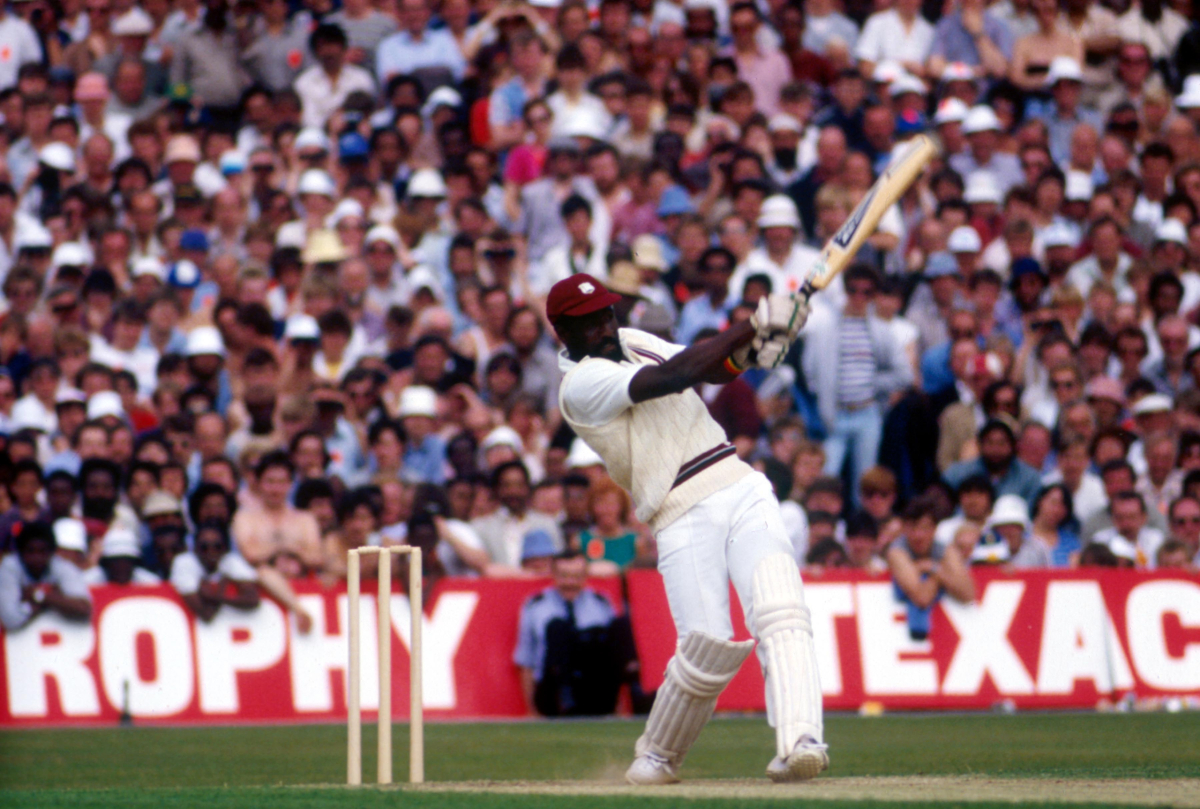
Viv Richards
Viv Richards remains the benchmark.
Gum in mouth, iconic cap, that swagger as he walked out. He never chased the tempo of the game. He set it. Bowlers adjusted to him, never the other way around.
Loose ball early, it vanished. Clean strike, minimal fuss, maximum damage. Control and destruction lived in the same innings.
He could anchor or accelerate with the same ease. One over of dominance, and the match shifted entirely.
Lance Klusener
Lance Klusener felt like a preview of modern finishing.
Left arm seam, heavy bat swing, simple intent: anything in the arc travelled.
He thrived when games broke open. Fielders on the rope, bowlers searching for control, pressure building in the chase. He leaned straight into that space.
South African fans remember “Zulu” well. Once he found timing, chases shifted in a handful of overs.
READ: Faf hails SA20 talent boom
Kapil Dev
Kapil Dev brought something different again, shaped as much by leadership as by striking power.
As captain of India’s 1983 World Cup side, he led with instinct rather than instruction. No overcomplication, no fear of stronger opposition, just clarity of intent and a belief that matches could be taken on at any stage.
His leadership style was built on trust. Players were given freedom to express themselves, particularly with the bat, and that looseness translated into a team that played without restraint. In pressure moments, he did not retreat into caution. He leaned into attack, often changing the state of a match through sheer will as much as tactics.
In the final of the World Championship of Cricket 1985, Kapil Dev delivered a superb opening spell: 7–1–17–3.
He was on a hat-trick after dismissing Mudassar Nazar and Qasim Umar off consecutive balls.
Look out for that inswinging yorker, probably the ball of the tournament. pic.twitter.com/0YybVaTA3y
— Cricketopia (@CricketopiaCom) March 10, 2026
The game did not change these players. It eventually caught up to them.
Photo: Action Images / Sporting Pictures