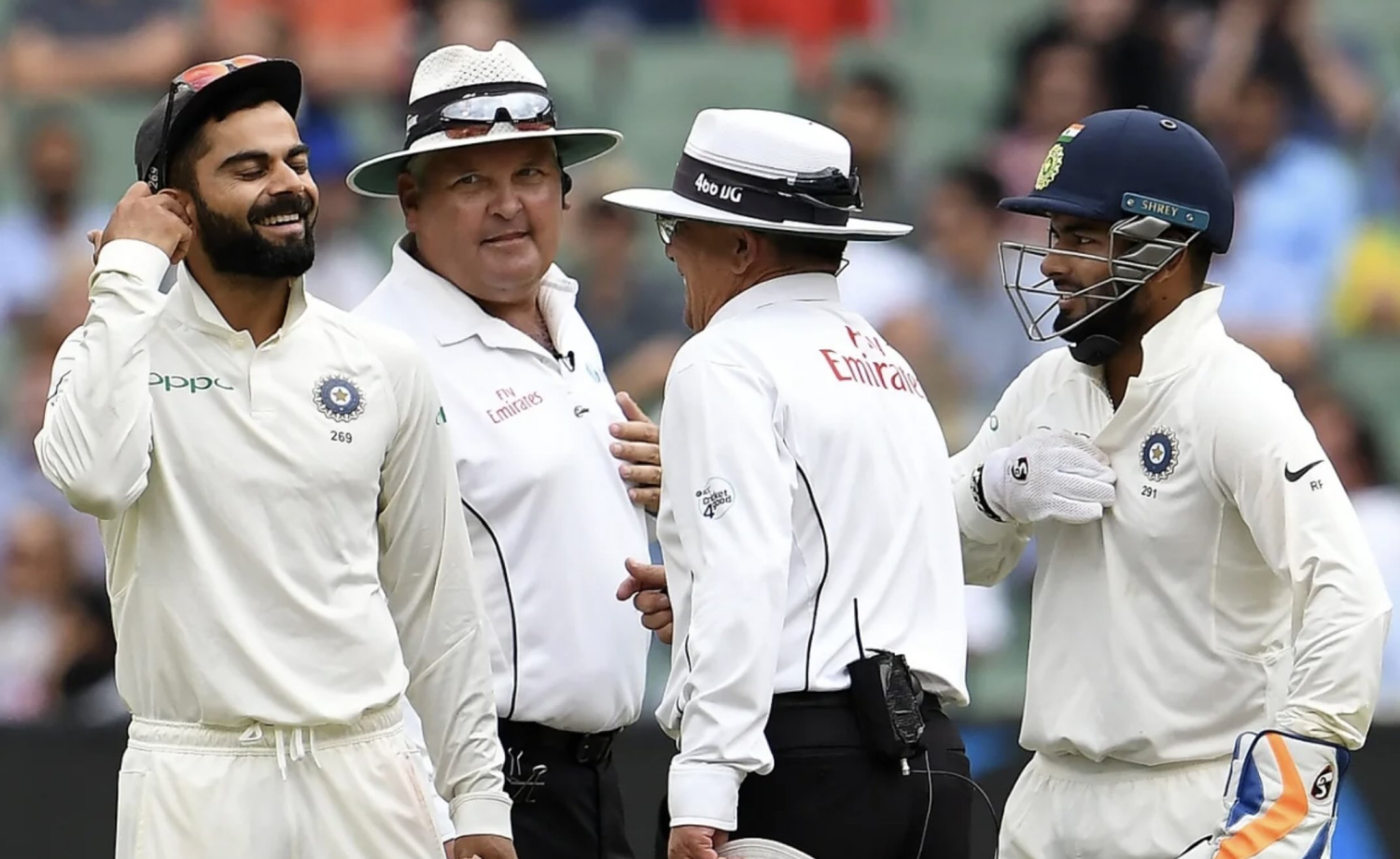
Even if you’re watching from far away, the spectacle of a major match in India transcends the screen. If you’re there, for instance in the press box, you can feel the engulfing throb of the national obsession beyond match days. Scores of Indian fans turn up to watch training sessions in their entirety. And not just to watch. For hours on end, they wave giant flags, blow conch shells and shout encouragement. Yes, during nets.
We’ve seen players melt under the weight of playing against India in India, not least Marco Jansen. Going into South Africa’s game against the home side in the 2023 World Cup in front of 66,000 screaming spectators – almost all of them blue-shirted – at Eden Gardens in Kolkata, the beanpole left-armer was his team’s coolest bowler under pressure. In seven games, he had taken 16 wickets at an average of 20.06, a strike rate of 20.63 and an economy rate of 5.84, and he was coming off a tournament-best 3-31 against New Zealand in Pune four days earlier.
Jansen’s first two overs disappeared for 27 on his way to figures of 1-94 in 9.4 overs. That’s an economy rate of 9.72; South Africa’s worst on the day. He was a tall, even paler than usual shell of the player he had been all tournament, and just about able to land the ball on the pitch. Worse, the effect lingered: in the 4.2 overs he bowled against Australia in the semi-final 11 days later, Jansen went wicketless for 35. Cruelly, the semi was played at the scene of his failure against the Indians.
It wouldn’t have helped Jansen that the match against India coincided with Virat Kohli’s birthday – which he shares with, of all people, Rassie Erasmus and Canadian rocker Bryan Adams. But that might have helped Kohli: he scored an unbeaten 101. Indians do not need additional reasons to show their adoration for the player who defines the modern age more than any other, but they had it that day and they made the most of the occasion. “Virat!” makes a short, sharp chant. How could Jansen not feel every rendition thud into his bones?
At least he had a ball in his hand with which to try to redeem himself. Umpires, who are as liable as players to fall prey to a hostile crowd, have nothing but a clicker. It is thus notable that Marais Erasmus doesn’t have troubling memories of standing in India’s home matches, at games in the country involving neutral teams, or when the Indians were on the road.
“I just seemed to get on with the Indian team and their megastar players fairly well,” he says. “I think that’s because I was a firm, no-nonsense character. A few of us didn’t have issues with them, but the fact that India is such a massive power in world cricket can put pressure on the opposition, obviously. But on umpires as well because there are so many eyes watching and following those games.”
Erasmus’ first involvement with India’s team comes with a story attached. He had started the second match of the 2005-06 men’s Test series in South Africa, at Kingsmead, as the reserve umpire. But, 27 deliveries into the third day’s play, Mark Benson was taken to hospital with heart palpitations. The original television official, Ian Howell, had to replace Benson. That made Howell the first umpire from a host country to take the field in a Test since the Elite Panel was established in April 2002. And that meant Erasmus, in his fifth match as an international umpire, stepped into Howell’s chair.
Erasmus was also behind the screen in the next Test of the rubber, at Newlands in January 2007. He would be part of international umpiring crews for another 38 games before, in January 2010, he walked out with Billy Bowden to stand in an India match for the first time. They were in Chittagong – it wouldn’t become Chattogram until April 2018 – for the opening Test of a series against Bangladesh. It was also Erasmus’ first Test as an on-field umpire. Was he edgy?
“I didn’t feel more nervous than at any other time,” Erasmus says. “Probably I didn’t realise how big the occasion was. I was just very happy to be given the opportunity.”
For much of the previous month he had been in India officiating in England’s ODI series, an assignment that took him to metropolises like Kolkata and Delhi, and of course he had been to Maximum City – Mumbai – during the 2008-09 Duleep Trophy. But let no-one tell you Bangladesh’s cities make less of an impression than India’s.
At rush-hour in Dhaka – which can feel like it never ends – you might need the police to order a tuk-tuk driver to take you from one area of this megalopolis, where more than 24 million people live, to another. If you don’t involve the cops and give the driver your destination, he will likely shake his head and ignore you.
Travelling five kilometres in Dhaka in any kind of vehicle, except on a bicycle, can take more than an hour. Some traffic lights remain red for 15 minutes while vehicles roar past perpendicularly in an unbroken line, like a train. Then your light turns green, and stays that way for 15 minutes as you and your fellow travellers roar past.
A busy port city on Bangladesh’s south-east coast, Chattogram is far smaller than Dhaka with a population of fewer than 6 million. But its streets are just as snarled with pedestrians, bicycles, rickshaws, cars and trucks. Erasmus found that out first-hand when he went off in search of a travel treasure during that 2010 Test.
The city’s ship-breaking yard is among the most important in the world. It deals with around 20% of the global industry, employs more than 200,000 people, and about half the steel in Bangladesh comes from there. But all Erasmus wanted was a ship’s compass: “One evening our liaison officer took us, and it felt like forever driving this way and that way, trying to bargain for a compass. But I did get one.” It came back to South Africa with Erasmus as intended, but remained in its wooden box unmounted. “Maybe in Hermanus [where Erasmus and his wife Adèle moved to from Malmesbury in May 2025] I will find a spot for it.”
Marais Erasmus: The Rock ’n Roll Years; Cricket in an Umpire’s Orbit by Telford Vice is available in bookshops and from https://naledi.co.za/product/the-rock-n-roll-years/

Photo: Getty Images


