
Spells shared in rhythm and pressure, where control at one end creates the chance at the other. It is here that some of the most iconic bowling duos the game has ever produced come into view.
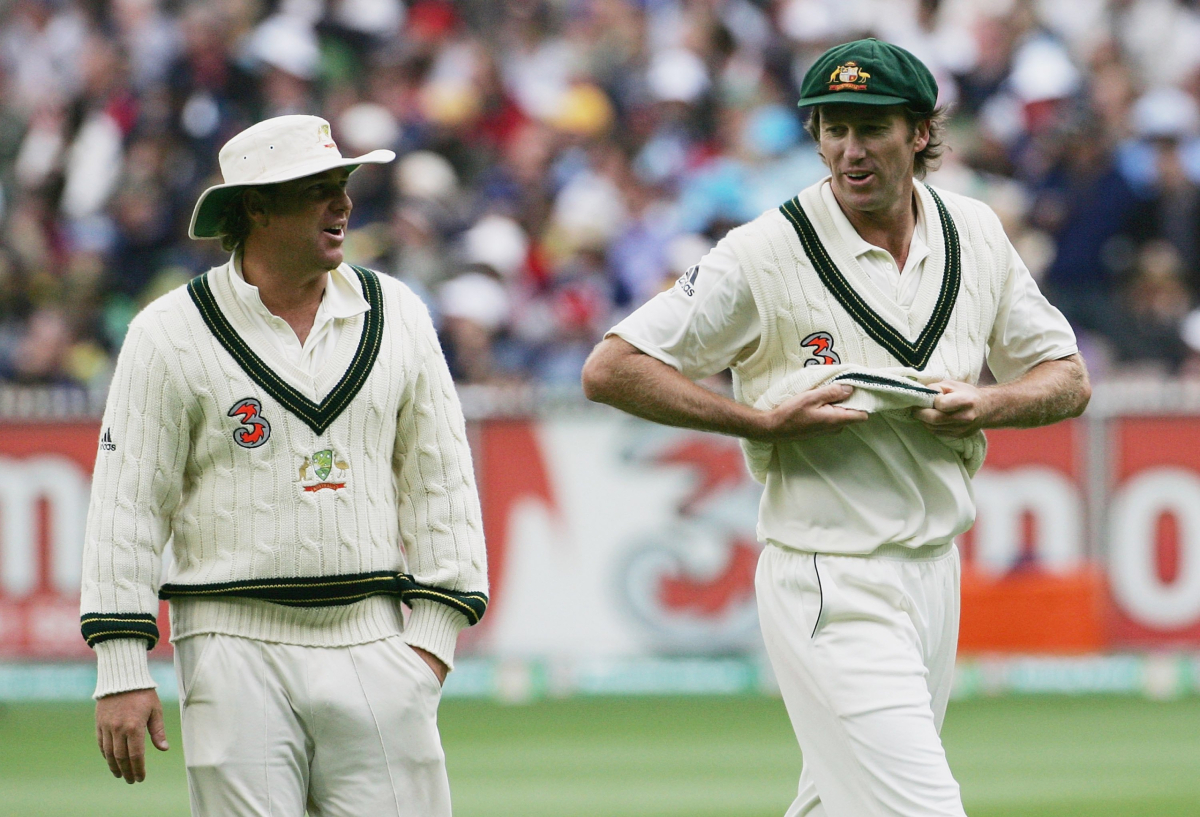
Australia – Shane Warne & Glenn McGrath
Shane Warne remains the greatest leg spinner the game has seen. He finished with 708 Test wickets and redefined wrist spin as a decisive force at the highest level. Early in his career there was sharp turn, drift, and an attacking intent that constantly drew batters into play. As he matured, he didn’t solely rely on turn and drift to get wickets. He added more subtilities his skillset and became very effective with his flipper.
Above all, Warne carried an aura that separated him from most bowlers. There was a presence, almost a mystique, that made facing him more complicated than the delivery itself. It was never just skill alone.
Glenn McGrath operated on line and length. Over and over again he landed the ball in the same corridor just outside off stump, forcing batters into mistakes through relentless accuracy.
Together, they formed the spine of Australia’s dominance through the 2000s, dominating batting lineups from both ends.
England – James Anderson & Stuart Broad
James Anderson finished his career as the leading wicket taker among fast bowlers in Test cricket history. Early on he bowled with greater pace, before evolving into a master of swing and control. He moved the ball both ways and became especially effective in English conditions where overhead conditions enhanced his threat.
Stuart Broad was a bowler who often changed the course of a match in a single spell. At his peak, he would steam in, legs pumping, and hit the seam hard to generate movement both ways off the pitch. His ability to extract seam movement made him a threat in English conditions and beyond. Across a career spanning 167 Tests and 604 wickets, he established himself as one of England’s most prolific fast bowlers, capable of producing match defining spells when he found rhythm.
Anderson provided sustained movement and control over long spells. Broad bowled spells that could win a test match in a single session.
South Africa – Allan Donald & Shaun Pollock
Allan Donald, “White Lightning”, was fast, fierce, and always at the batter. He attacked batters from the first over and set the tone for South Africa’s fast bowling identity.
Shaun Pollock stood at the other end with control and discipline. He hit the same length repeatedly, rarely offering anything loose.
Special mention must go to Dale Steyn and Morne Morkel.
Dale Steyn was the premier fast bowler of his era, fast and hostile, with late movement with the new ball, devastating reverse swing, and success in all conditions.
Morne Morkel used steep bounce, extracting awkward lift from consistent lengths that unsettled batters. From around the wicket, he was especially dangerous to left handed batters.
READ: Atherton survives White Lightning storm at Trent Bridge
Pakistan – Wasim Akram & Waqar Younis
Wasim Akram mastered swing in both directions at high pace and became one of the most complete fast bowlers the game has seen. His control of the old ball, particularly reverse swing, made him effective across all conditions.
Waqar Younis was the strike weapon. Express pace combined with late reverse swing and yorkers aimed directly at the stumps made him devastating in bursts.
Together, they set the standard for reverse swing bowling in cricket.
Sri Lanka – Chaminda Vaas & Muttiah Muralitharan
Chaminda Vaas brought discipline with the new ball. Early swing, tight lines, and relentless accuracy allowed him to control the opening exchanges and apply pressure from the outset.
Muttiah Muralitharan, the leading wicket taker in Test history with 800 wickets, used variation and a unique action to remain a constant threat in all conditions.
Once Vaas had done the groundwork, Murali often took full control from the other end.
New Zealand – Trent Boult & Tim Southee
Trent Boult’s late swing to right handed batters made him a consistent early breakthrough option with the new ball.
Tim Southee complemented him with seam movement in both directions and the ability to bowl long, disciplined spells. Together they formed a balanced and reliable new ball partnership.
West Indies – Curtly Ambrose & Courtney Walsh
Curtly Ambrose was relentless height and accuracy. He hit the same testing lengths repeatedly, suffocating batters over long spells.
Courtney Walsh matched him with endurance and discipline, providing control across long careers and ensuring pressure never lifted.
Together, they carried the final great fast bowling legacy of West Indies cricket, extending a tradition that once defined the fast bowling.
Photo: Hamish Blair/Getty Images