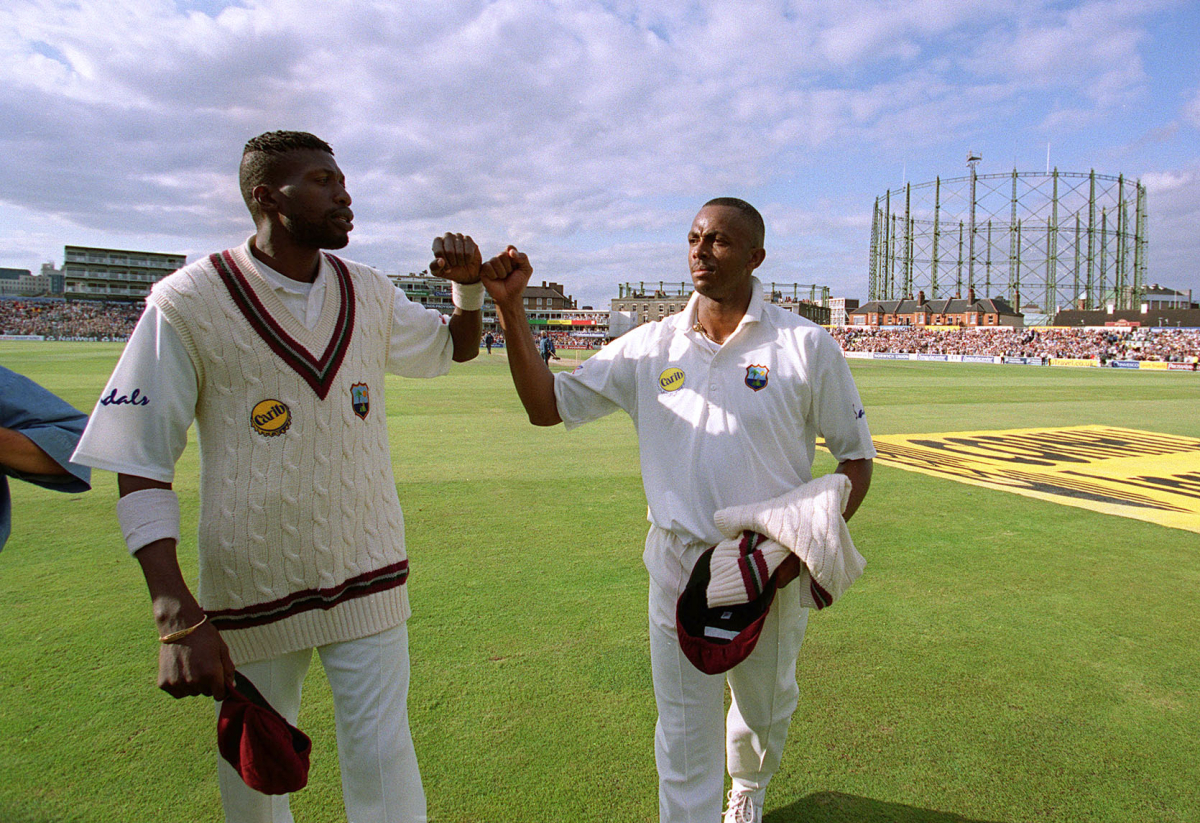
On the latest episode of the Stick to Cricket podcast, former West Indies greats Courtney Walsh and Curtly Ambrose offered a fascinating insight into why many of cricket’s legends struggle to understand the modern obsession with workload management.
The statistics alone make Walsh’s argument compelling. The Jamaican fast bowler took 519 Test wickets in 132 matches and missed just one Test because of injury. It is a remarkable record for a man who spent nearly two decades charging in at the highest level.
His philosophy was simple: bowl to get fit, then maintain your rhythm.
“If you’re going to rest me and bring me back, I’m going to start all over again,” Walsh explained. “Once you’re match fit, it’s maintenance.”
READ: West Indies end 23 year wait for Sri Lanka triumph
Walsh admitted he would not have survived in the modern game’s stop start approach. He even recalled a conversation with fellow pace great Glenn McGrath, who believed the interruptions to playing rhythm were “killing him” late in his career.
For bowlers of that generation, match fitness could not be replicated in a gym or a laboratory. It came from bowling overs, playing county matches between Tests and staying in a competitive rhythm.
Modern cricket, however, is operating under very different conditions.
The international calendar is more congested than ever. Players move from Test cricket to T20 leagues and back again, often with little time to recover. Sports science departments have access to data that previous generations could never have imagined, and injury prevention has become a central part of team management.
The evidence is difficult to ignore. England have carefully managed the workloads of stars such as Jofra Archer and Mark Wood after repeated injury setbacks. Australia have rotated quicks including Pat Cummins and Josh Hazlewood to preserve them for major assignments.
ALSO: Bowling duos that shattered batting lineups
Yet Walsh and Ambrose’s questions remain valid.
If a series is on the line, should one of your best bowlers be sitting in the dressing room because a spreadsheet says his workload has been exceeded?
For Ambrose, the answer is unequivocal.
“I want to win,” he said. “To sit and watch cricket and not be a part of it, that destroys me.”
Perhaps the truth lies somewhere between the old school and the new. Sports science has undoubtedly prolonged careers and reduced the risk of serious injuries. But there is also something to be said for rhythm, continuity and understanding one’s own body.
Fast bowling has always been an art as much as a science.
Photo: Action Images / Andrew Budd