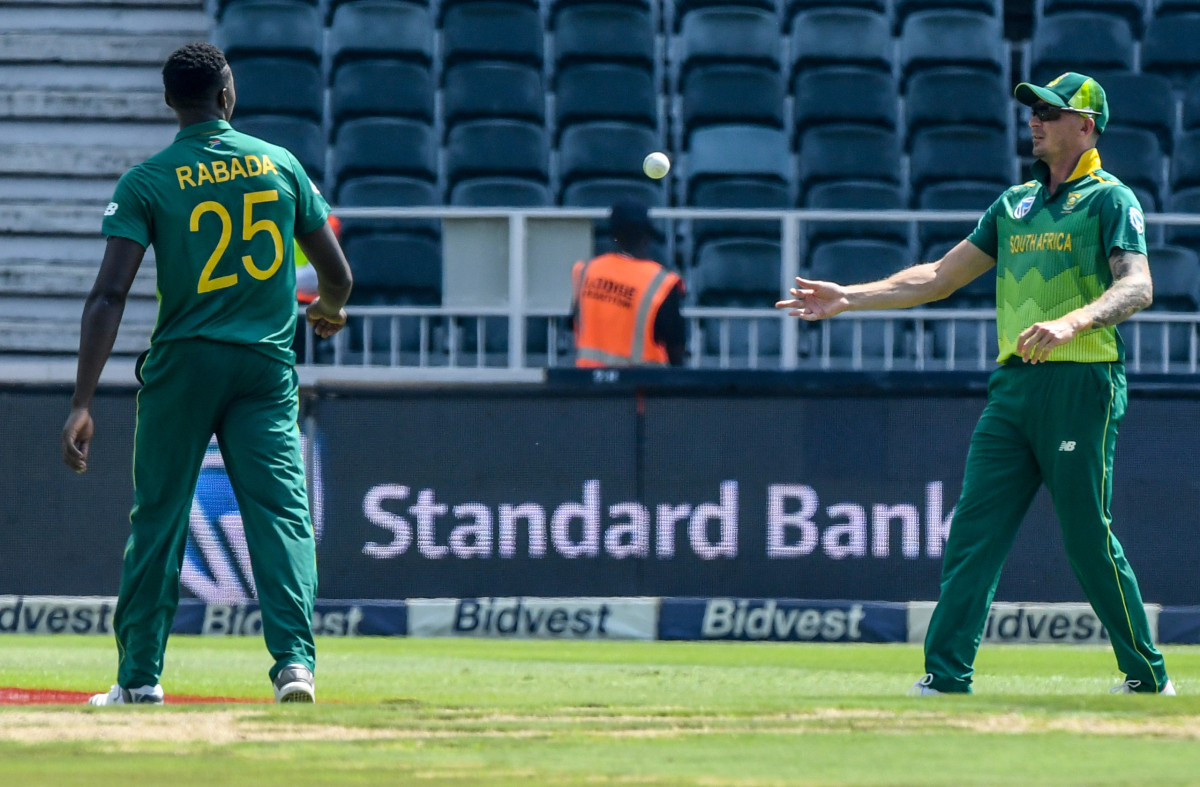

On one side is Dale Steyn, a bowler who brought high pace, late swing and accuracy into the IPL’s early years. Across 95 innings he conceded 2508 runs and took 97 wickets, with an average of 25.86, an economy of 6.92 and a strike rate of 22.43.
READ: Klaasen’s numbers tell a brutal story
His impact was often immediate. Wickets came through movement at speed and the ability to land the same threatening length repeatedly. When rhythm arrived, innings could shift in a handful of deliveries. His best figures of 3 for 8 capture that decisive edge. The 1064 dot balls reflect sustained control at full pace, where batters were kept under constant pressure even without obvious scoreboard swings.
On the other side is Kagiso Rabada, operating in a more aggressive IPL where scoring rates are higher and batters impose themselves earlier. Across 94 innings he has conceded 3092 runs and taken 135 wickets, with an average of 22.90.
His economy of 8.69 reflects that tempo, yet the strike rate of 15.82 defines his value. He hits hard lengths, attacks the top of off stump, and brings pace that forces errors in short, decisive spells. Wickets arrive in clusters, and momentum can turn quickly once he finds his opening. Six four wicket hauls and best figures of 4 for 21 underline his ability to break lineups in motion rather than wait for them to settle.
ALSO: Five of Dale Steyn’s best IPL spells
The difference lies in how impact is delivered. Steyn’s threat came through pace, movement and repeatable accuracy at high intensity, where breakthroughs often arrived early in a spell. Rabada operates through frequency and force, creating wicket bursts across different phases of an innings in conditions where batters rarely stay still for long.
Two South African greats shaped by different IPL eras, both capable of deciding a match in their own way.
If you were selecting an all time IPL XI, who takes the new ball.
Photo: Sydney Seshibedi/Gallo Images/Getty Images